Thoughts from the paint
  • Thoughts
  • About
  • Bio
    • My Bio
    • Guest Bios
  • Contact

Back to SPAC

8/17/2015

1 Comment

 
Picture
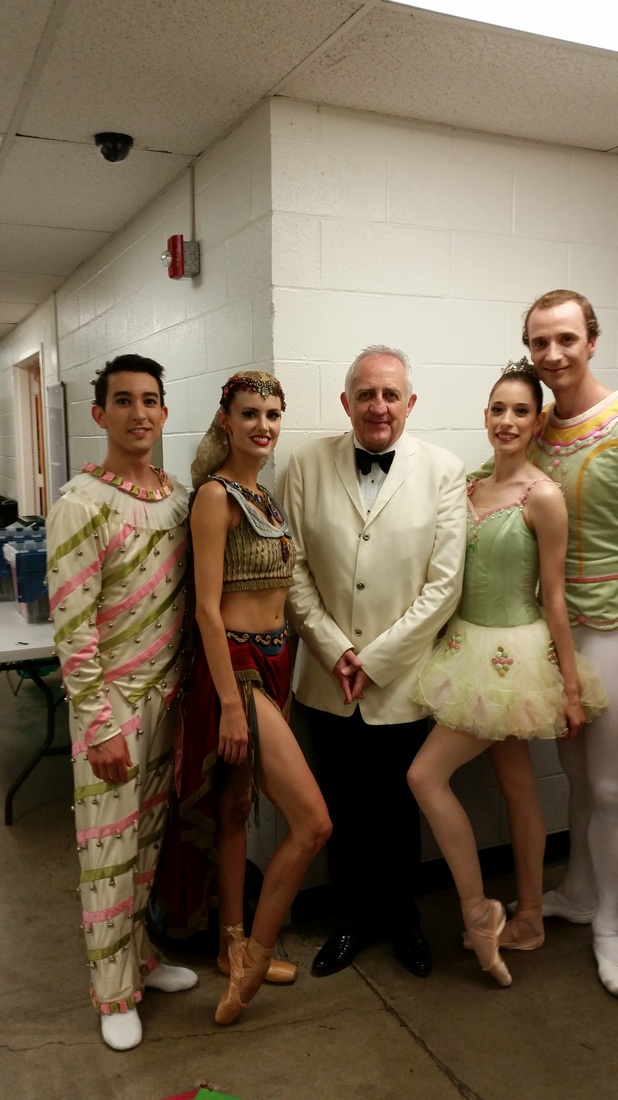
Anthony Huxley, me, Bramwell Tovey, Rebecca Krohn, and Ask la Cour
Christmas in August anyone? I had what was probably the first Nutcracker gig of the year over the weekend, when I returned to Saratoga Springs to perform with renowned British maestro Bramwell Tovey and the incredible Philadelphia Orchestra.  On a sunny 90 degree day, with some bonus humidity in the form of an evening drizzle, the PO and the NYCB teamed up for a program called “Winter Tales.” The orchestra performed Rimsky-Korsakov’s suite of The Snow Maiden, Prokofiev’s Peter and the Wolf, and Waldteufel’s Skater’s Waltz before Rebecca Krohn, Ask la Cour, Anthony Huxley, and I came out for a visual assist on selections from Tchaikovsky’s Nutcracker.  Anthony danced the Hoops trepak, I performed the Arabian solo, and Rebecca danced the Sugarplum Fairy solo and then the grand pas de deux with Ask. The orchestra played other excerpts from the Nutcracker Suite including the Act I March, Marzipan, the Pine Forest Scene, and the Waltz of the Flowers as a stirring finale.

It felt bizarre to perform the Nutcracker in the summer, but it was somehow fitting—for my role at least.  After all, the skirted Arabian bikini is infinitely more appropriate attire for August than it is for December. It was the first time I wasn’t shivering backstage beforehand! I also had a decent tan from a recent trip to Grand Cayman, so I didn’t feel like such a vampire for once.  But even more fun was dancing such a sultry piece in the lazy days of summer.

Balanchine’s Arabian choreography is a bizarre mix of heavy grand allegro jumps and sustained, adagio développés. Sometimes there are quick steps for every note in a triplet—like in the opening stage crossings which always make me think of Tina Turner in Proud Mary. But sometimes there is 

Read More
1 Comment

A One Temperament Toga

7/28/2015

2 Comments

 
Picture
Adam Luders in Phlegmatic
Saratoga Springs was as idyllic and charming as ever this year, but I was more than a little distracted by the end. My 15 year old cat Eddie was hospitalized late Tuesday night of the second week of our Saratoga run, and I was aching to get back to Brooklyn to say goodbye to him for the rest of the tour. I raced back to the city on Sunday morning and arrived an hour before he died in my arms. I've lost a lot of pets over the years but this one was by far and away the hardest. What a summer.  I feel I have become an accidental eulogist on this site lately, and I would very much like to stop writing about death!

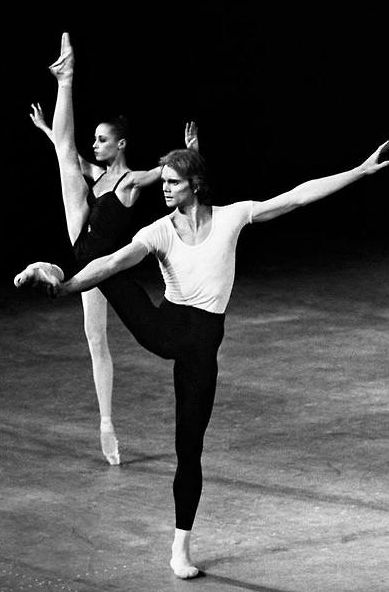
The saving grace of the week was dancing Balanchine’s The Four Temperaments.  I have been doing the First Theme in 4T’s for such a long time that it feels like it was made on me, though of course it wasn’t. (This is one of Balanchine’s gifts: his ballets are so effortlessly habitable.  A mere hour after learning his choreography one feels intrinsically rooted in the movement and the music.) Balanchine created 4T’s for the inauguration of Ballet Society in 1946. He had privately commissioned the Paul Hindemith score in 1940 and only later decided it should become a ballet.  

The First Theme feels more like yoga than ballet, which is probably why it was such a welcome distraction.  It consists of sustained, contorted poses—one for each note in the score. It is pure and literal: when the strings’ notes ascend, I get lifted up. When the piano is heavily clanged, I am accordingly dropped nearly to the ground and dragged offstage during its lingering rumble.  Extended notes for the strings become slow promenades in which my legs wrap around my partner’s ankle, thigh, and neck. It is an impassive, asexual Kama Sutra. It requires an intense focus 


Read More
2 Comments

Albert's Legacy

7/2/2015

0 Comments

 
Picture
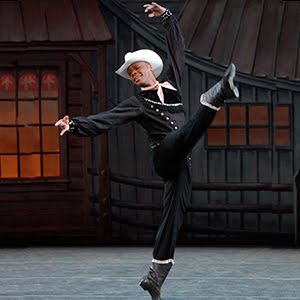
Albert in Western Symphony, photo by Paul Kolnik
Picture
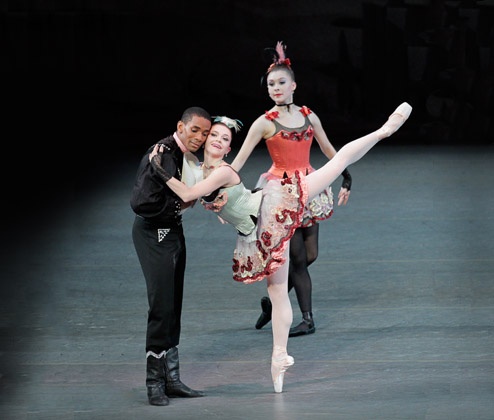
Craig Hall, Megan Fairchild, and Callie Bachman in Western, photo by Paul Kolnik
I was going to move on and post a dance review today, but the response to my Albert Evans tribute has been so overwhelming that I wanted to thank everyone first. Several of you have commented on this site and many others have emailed, called, or texted me privately. I was astonished by the number of current and former dancers, ballet fans, old friends, teachers, musicians, stagehands, and volunteers who felt compelled to contact me and share memories of the universally beloved Albert.  This outpouring of love is a testament to his graceful spirit as well as to the intensity of the bonds one forms in the dance world.  We have lost one of the best of our ilk, yet the past week has served as a reminder of the magnanimity of those who remain. I am humbled and oh so thankful to be a part of this exalted community.   

We at the NYCB began our Saratoga rehearsal period on Tuesday with a Four Temperaments rehearsal, which felt appropriate if a little surreal.  As I have mentioned, Albert’s interpretation of Phlegmatic will always loom large in my memory, so to be able to dance this ballet for him in the upcoming weeks is a gift. And fortuitously, the beautiful Craig Hall will be dancing one of Albert’s 


Read More
0 Comments

Paint Shoes!?

4/3/2015

0 Comments

 
Picture
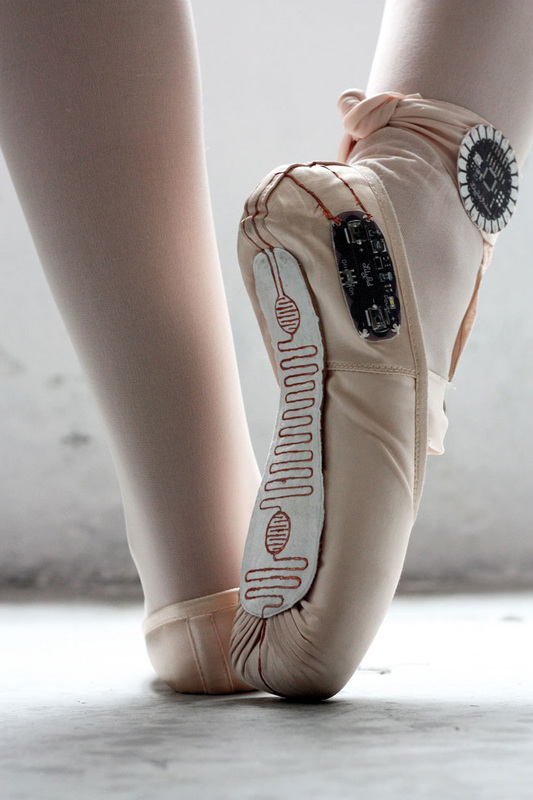
The high-tech E-Traces pointe shoes
When I conceived of my blog and selected a title for the site, I did not anticipate that dancers would someday be able to paint with their feet. How prescient I seem in hindsight, yet I am the most technologically inept person I know; it is a constant surprise to me that I even have a blog!  Anyway, with the aid of some pretty fancy technology (called the Lilypad Arduino), the arcs and divots traced by a dancer’s pointe shoes á terre can now be downloaded and converted onto a computer screen. A company called E-Traces has effectively turned any dancer into Jackson Pollock. 

E-Traces began as Lesia Trubat’s final project at the ELISAVA design school in Barcelona. On her website she claims that the electronic shoes can be used for a number of things, including for analysis during training.  I think that is a neat aspect of the shoes, and it would be illuminating—and humbling I’m sure—to see what Tiler Peck’s toe-prints look like in a series of chaîné turns compared to the rest of us (she has the best in the biz)! Trubat’s site also features a video of a dancer performing as the slashes and curlicues made by her feet on the floor float all around her on the screen. The video is interesting and reminded me somewhat of Disney’s Fantasia (which I adore), but it seems to me that the full artistic potential of the shoes’ innovative technology has yet to be tapped. And as of now the shoes only react to pressure from the floor, but it would be cool if eventually they could trace the images of feet in the air as well.

At any rate, it is exciting that the ballet world is piquing the interest of techies and designers. After all, the basic technology of the pointe shoe has changed relatively little in the past two hundred years. I suppose that Marie Taglioni wouldn’t recognize a modern pair of Freed’s (the brand of 


pointe shoes used by the NYCB), but in reality only a sturdy hessian box, some nails, and a stiff leather shank have been added to her original instrument.  The most coveted shoes are still hand-cobbled by skilled artisans (all men it seems).

When City Ballet performed at Covent Garden several years ago a group of us went to visit the London Freed factory and to “meet our makers.” Female dancers wear shoes made by a specific cobbler, or maker, as designated by a symbol on the bottom of the shoe’s arch. The symbols are funny: there is a dollar sign, a fish, a Maltese cross, and many letters. (The male dancers’ leather or canvas slippers are all machine-made and are therefore much more uniform.)  Handmade pointe shoes all have a “birthdate” stamped on the sole, and they are born in batches of twenty.  Each batch is slightly different since they are handmade, and if we women feel we get an exceptional batch—one that is really comfy or aesthetically pleasing—we will hoard those for special roles. I will always fondly remember a perfect batch of shoes from Pearl Harbor Day some years ago. You can’t save shoes for too long, however. The glue breaks down and they slowly decay.

Sometimes we get batches that just don’t work for us; they could be crooked or break in oddly or feel just plain weird. When this happens we donate the shoes we cannot wear to the School of American Ballet. This is a godsend for young dancers if they can find a pair to fit them, for they get the shoes at a discounted price—and pointe shoes are crazy expensive! They run roughly a hundred bucks for a “stock” pair (with universalized, average measurements and randomly assigned makers), but the custom-fit ones that we use cost much more. Curiously, I could not find out what the E-Traces pointe shoes cost. I remember when my poor parents were paying for all of my shoes at SAB and I had to make a pair last for a week or more. In contrast, during performance seasons we company dancers will go through roughly a pair a day—more if we are performing in the outdoor heat and humidity of Saratoga Springs, maybe fewer during the winter when shoes don’t lose their shape as quickly.  One can almost forecast the weather based upon pointe shoes alone—they are so susceptible to moisture.   

Matching up feet and makers is also practically an alchemical process. It involves seasoned fit experts and several trial pairs of shoes, and custom orders require tiny measurements of every single part of the foot.  My maker is Mr. “T.” He specializes in a light, pliant shoe with a moderately square box. This fortuitous symbol inspires my friends and coworkers Gwyneth Muller and Tess Reichlen—fellow Mr. T devotees—to make all sorts of terrible A-Team puns like “I pity the foot.” Groan, I know.  Sadly, I did not get to make Mr. T’s acquaintance on our London tour—he worked in a location further afield.  But my friend Janie Taylor did get to meet her maker—Mr. Anchor—and they were both wearing the same striped shirt. It was hilarious!

If the basic form of the pointe shoe has changed little since Anna Pavlova’s time, at least the orthotics have improved a lot.  As a young student, the only means of pointe shoe padding available to me were lamb’s wool, cut-up sock tips, and paper towels (all still used today). I was taught to use lamb’s wool which starts out scratchy but plush, but then compresses and clumps up uncomfortably when feet get sweaty, causing nasty blisters.  Naturally, it took a woman to come up with a better—and less bloody—alternative.  In 1996 a former City Ballet dancer, Leslie Roy, came up with a gel toe pad (called an Ouch Pouch) with her husband Michael Heck, a chemical engineer. They formed the company Bunheads which has since invented a variety of gel inserts and accessories for pointe shoes. (Full disclosure, I used to model for the company.)  

Since then much of the dance world has switched over to the gel cushions which last much longer and mold to one’s toes. They are also washable and don’t slide around inside the shoes like other methods. Many older dancers still stick to paper towels, which they must replace several times a day as they are disintegrated by sweat, but I feel like the paper towels are ecologically reckless and I already read the newspaper in print. You have to pick your battles…

Pointe shoes, as you can see, are kind of gross. They start out pristine and shiny and beautiful and they quickly become sweaty and stinky and misshapen.  Whenever I hear about “face-washing” in hockey—google it, it’s disgusting—I shamefully think of my own pointe shoes. At least in ballet we try to keep the ick-factor contained.  Like so much in ballet, the applied reality is quite different from the pretty-in-pink stereotype.  


Read More
0 Comments

Serenade Sadness

1/21/2015

4 Comments

 
Picture
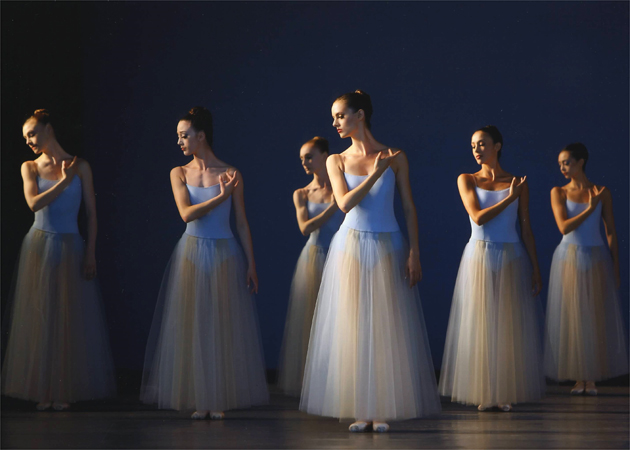
Photo by Paul Kolnik
I know, that title sounds like a Lana Del Rey spoof! But I am bummed because the NYCB winter season opened this week with Balanchine’s Serenade, one of my favorite ballets, and I could not participate.  My injury took a little longer than anticipated (ugh, when doesn’t that happen?) and I do not return to the stage until next week when I debut as the Theme couple in Robbins’s Goldberg Variations. At least there is the comfort that Serenade will be back. Like death and taxes, Balanchine’s signature works--Serenade, Symphony in C, Agon, Concerto Barocco and some others—are perennials in our rep. In fact, all of those ballets are being performed in the first few weeks of the season, and three of them were grouped together opening night! The first few weeks of programming for this season are incredible, and I would have been on every night.  I’m sad to miss all of it, of course, but especially Serenade. It is the first ballet that Balanchine made in America, and it feels a priori in every way.  I wouldn’t mind if it opened every season!

Serenade begins in a calming blue darkness with seventeen women standing still, their right arms raised to shield their faces from what feels like moonlight. When Tchaikovsky’s opening musical phrase repeats they slowly move their arms in unison until their parallel feet snap to first position. Then, with their arms opened wide they arch backwards to the sky as the last chord trails off into silence. It is a balletic hosanna. From there the music picks up and the women begin to bend and shape themselves into little floral-patterned quartets (your math is correct, one girl simply runs off into the wings for much of the piece) and the stage becomes a swirling sea of blue tulle. But that tranquil, evanescent opening is so spiritually charged that it never fails to awe me.

It is roughly two minutes long and it summarizes the whole ballet—and also the entirety of human experience! The women’s arms float effortlessly, but the path they trace is heavy with meaning: 

Read More
4 Comments
<<Previous

    Author

    Faye Arthurs
    - Faye Arthurs

    Categories

    All
    ABT
    Albert Evans
    Alexei Ratmanksy
    A Midsummer Night's Dream
    An Introduction
    August Bournonville
    Benjamin Millepied
    Beyonce
    Broadway
    Carla Korbes
    Carnegie Hall
    Che Malambo
    Chopiniana
    Chris Wheeldon
    Concerto Barocco
    Craig Hall
    Crystal Pite
    Death Of Klinghoffer
    Devin Alberda
    Donizetti Variations
    Duo Concertant
    Firebird
    George Balanchine
    Georgina Pazcoguin
    Glass Pieces
    Goldberg Variations
    Gwyneth Muller
    Hamilton
    Harlequinade
    In The Night
    Janie Taylor
    Jared Angle
    Jerome Robbins
    Jewels
    Joshua Beamish
    Kaitlyn Gilliland
    Katy Perry
    LADP
    La Sonnambula
    La Sylphide
    La Valse
    Leanne Cope
    Le Baiser De La Fee
    Liebeslieder Walzer
    Lin-Manuel Miranda
    Maria Kowroski
    Mariinsky
    Mark Morris
    Martha Graham
    Martin Harvey
    Miami City Ballet
    Mick Jagger
    Moira Shearer
    Mozartiana
    Opus 19/The Dreamer
    Pictures At An Exhibition
    PNB
    Pontus Lidberg
    Raymonda
    Robbie Fairchild
    Russell Janzen
    Saratoga
    Sebastien Marcovici
    Serenade
    Swan Lake
    Symphony In C
    Symphony In Three Movements
    Teresa Reichlen
    The Four Temperaments
    The Nutcracker
    Tiler Peck
    Troy Schumacher
    Twyla Tharp
    Wendy Whelan
    William Forsythe
    Without

    Archives

    September 2016
    August 2016
    July 2016
    June 2016
    May 2016
    April 2016
    March 2016
    February 2016
    January 2016
    December 2015
    November 2015
    October 2015
    September 2015
    August 2015
    July 2015
    June 2015
    May 2015
    April 2015
    March 2015
    February 2015
    January 2015
    December 2014
    November 2014
    October 2014
    September 2014
    August 2014
    July 2014

    Related

    New York City Ballet
    Oberon's Grove
    BalletCollective

    Globe Dancer
    Kaitlyn Gilliland
    Bachtrack​

    RSS Feed

©2014 Faye Arthurs - Thoughts from the paint
Thoughts         About          Bio         Contact